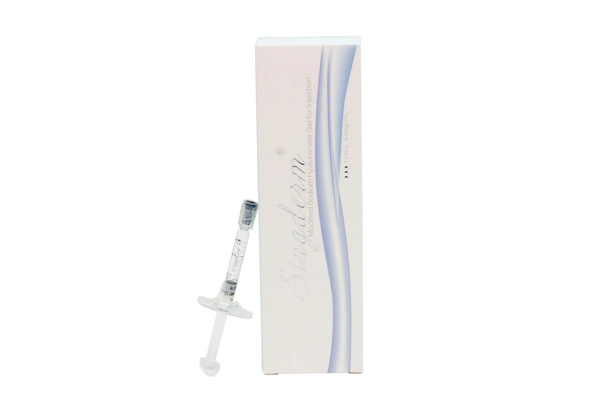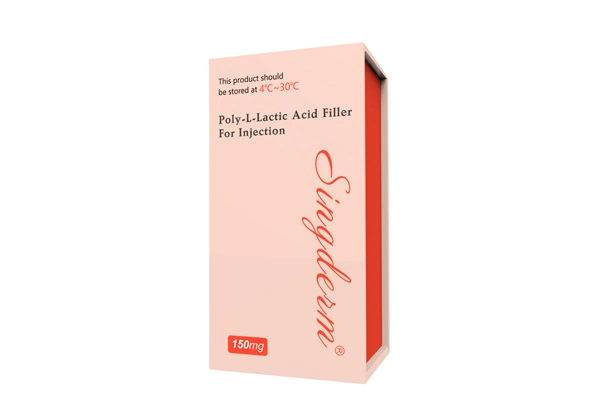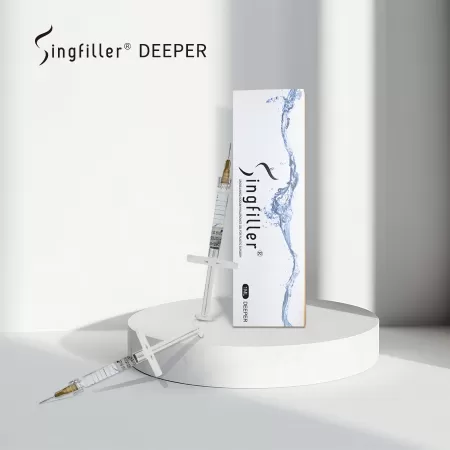

PLLA fillers are injectable medical aesthetic products formulated with Poly-L-lactic Acid (PLLA), a biodegradable and biocompatible synthetic polymer that has been safely used in medical applications for decades. Unlike conventional dermal fillers that create immediate volume by occupying space beneath the skin, PLLA fillers function as collagen stimulator fillers, encouraging the body's own regenerative processes to restore youthful skin architecture over time.
Poly-L-lactic acid has a long history of clinical use in absorbable sutures, orthopedic implants, and controlled drug-delivery systems due to its excellent biocompatibility and predictable biodegradation profile. In aesthetic medicine, PLLA microparticles are suspended in sterile water prior to injection and gradually activate fibroblasts, initiating a biological cascade that promotes new collagen formation.
This regenerative mechanism distinguishes PLLA fillers from traditional hyaluronic acid (HA) fillers. Instead of delivering an immediate cosmetic effect, PLLA provides progressive tissue remodeling through biostimulation, making it particularly suitable for patients seeking natural-looking rejuvenation rather than dramatic facial augmentation.
As collagen synthesis continues over the months following treatment, patients typically experience gradual improvements in:
Facial volume restoration
Skin firmness and elasticity
Skin thickness
Fine lines and wrinkles
Facial contour definition
Overall skin quality
Because the improvements originate from newly generated collagen rather than implanted filler material, results often appear more natural and integrate harmoniously with existing facial anatomy.
Today, PLLA fillers are widely used by aesthetic physicians across the world to address age-related collagen loss, facial volume depletion, and skin laxity while supporting long-term regenerative outcomes.
One of the primary reasons PLLA fillers have gained worldwide recognition is their ability to address one of the root causes of facial aging—collagen depletion.
Collagen accounts for approximately 75–80% of the skin's dry weight, providing structural support, tensile strength, and elasticity. Beginning in the mid-20s, natural collagen production gradually declines at an estimated rate of about 1% per year, while environmental factors such as ultraviolet radiation, smoking, oxidative stress, and pollution further accelerate collagen degradation.
As collagen levels decrease, visible signs of aging begin to appear, including:
Facial volume loss
Hollow temples
Mid-face flattening
Nasolabial folds
Marionette lines
Reduced skin elasticity
Skin thinning
Wrinkle formation
Unlike fillers that simply replace lost volume temporarily, PLLA fillers stimulate the body's natural ability to rebuild collagen, making them an increasingly popular choice within the growing field of regenerative aesthetics.
The science behind PLLA fillers centers on biostimulation—the activation of the body's own tissue regeneration mechanisms rather than immediate mechanical filling.
Following injection, PLLA microparticles are evenly distributed within the deep dermis or subcutaneous tissue. Initially, the sterile water used for reconstitution provides temporary volume, which gradually dissipates within several days. The true regenerative process then begins.
The injected PLLA microparticles initiate a mild, controlled inflammatory response that recruits macrophages and activates fibroblasts. These fibroblasts subsequently synthesize new extracellular matrix components, particularly Type I collagen, while also promoting elastin remodeling and dermal strengthening.
This biological process, known as neocollagenesis, develops progressively over several months, resulting in gradual restoration of facial support and improved skin quality.
The regenerative pathway can be summarized as follows:
PLLA Injection → Controlled Biostimulation → Fibroblast Activation → Type I Collagen Production → Extracellular Matrix Remodeling → Natural Facial Rejuvenation
Compared with conventional fillers, this mechanism produces a more gradual transformation, allowing patients to maintain a refreshed appearance without abrupt changes in facial volume.
The regenerative mechanism of PLLA fillers provides several important biological advantages:
Natural collagen regeneration instead of artificial volume replacement
Progressive improvement that closely mimics natural facial aging reversal
Enhanced dermal thickness through extracellular matrix remodeling
Improved skin elasticity resulting from collagen and elastin remodeling
Long-lasting aesthetic outcomes supported by newly formed collagen rather than residual filler material
Because newly synthesized collagen becomes part of the patient's own tissue architecture, aesthetic improvements may remain visible long after the PLLA material has been naturally metabolized.
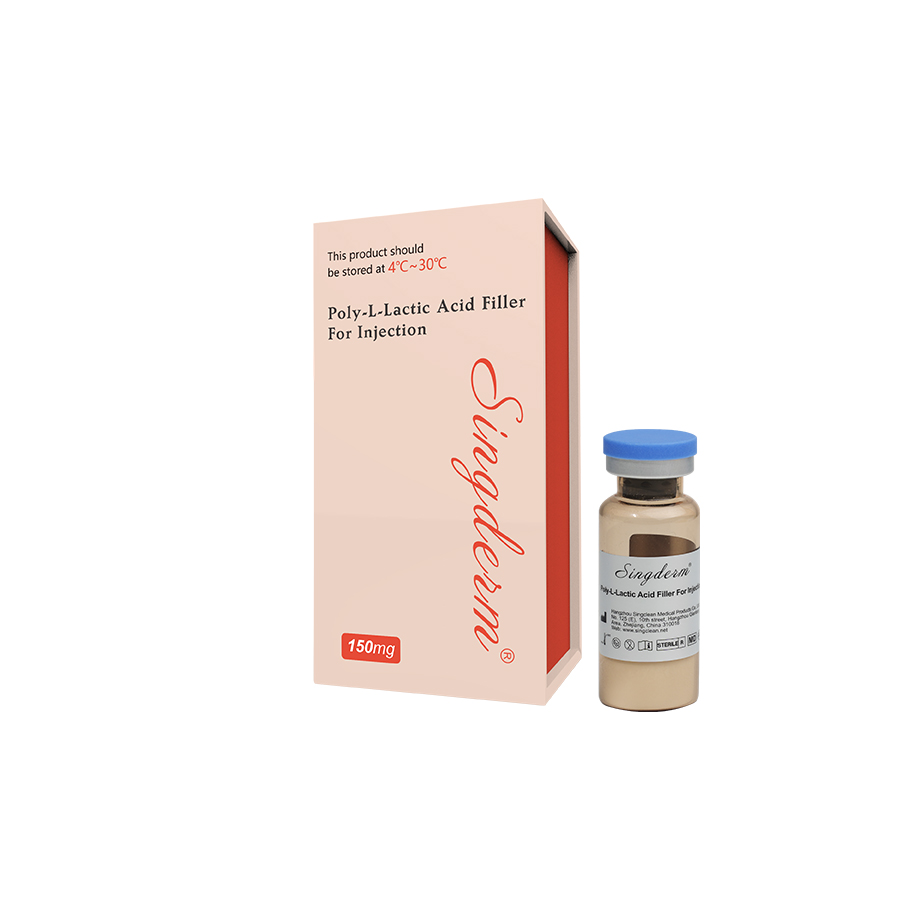
Both PLLA fillers and hyaluronic acid (HA) fillers are widely used in aesthetic medicine, but they serve different clinical purposes. Choosing the appropriate injectable depends on the patient's anatomy, aging pattern, treatment goals, and expectations.
While HA fillers deliver immediate correction by physically replacing lost volume, PLLA fillers act as collagen stimulator fillers, gradually rebuilding the skin's structural foundation through neocollagenesis. Rather than competing technologies, these two injectable categories are often complementary and may be incorporated into comprehensive facial rejuvenation plans.
The table below summarizes the major differences between PLLA fillers and HA fillers.
| Feature | PLLA Fillers | Hyaluronic Acid (HA) Fillers |
|---|---|---|
| Primary Mechanism | Stimulates collagen production (biostimulation) | Provides immediate volume replacement |
| Main Ingredient | Poly-L-lactic Acid (PLLA) | Cross-linked Hyaluronic Acid |
| Treatment Outcome | Progressive tissue regeneration | Instant contour enhancement |
| Time to Visible Results | Gradual (typically 4–12 weeks) | Immediate |
| Longevity | Up to 24 months or longer* | Approximately 6–18 months |
| Best Indications | Global facial rejuvenation, collagen restoration, skin quality improvement | Lips, chin, nose, tear trough, localized volume correction |
| Skin Quality Improvement | Excellent | Moderate |
| Maintenance Frequency | Lower | Higher |
| Reversibility | Naturally biodegrades over time | Can be dissolved with hyaluronidase (for HA products) |
*Duration varies depending on treatment protocol, patient metabolism, injection technique, and lifestyle factors.
The global medical aesthetics industry is shifting toward treatments that support tissue regeneration rather than simply replacing lost volume. As a result, PLLA fillers are expected to remain a key technology within the rapidly growing field of regenerative aesthetics.
Several trends are shaping the future of PLLA-based treatments:
Patients increasingly prefer subtle, long-lasting rejuvenation that enhances natural facial structure and skin quality. This trend continues to drive demand for collagen-stimulating injectables.
Future treatment protocols are expected to combine PLLA fillers with complementary modalities—including hyaluronic acid fillers, skin boosters, energy-based devices, and regenerative biologics—to deliver individualized treatment plans.
Ongoing research is focused on optimizing PLLA particle characteristics, suspension stability, and manufacturing processes to improve injectability, handling, and collagen stimulation while maintaining high safety standards.
As evidence grows, regenerative injectables may play a larger role in both facial and body rejuvenation, broadening their applications within aesthetic practice.
Rising awareness of minimally invasive procedures, aging populations, and demand for natural-looking results are expected to support continued global growth in the PLLA filler market. Manufacturers capable of delivering consistent quality, regulatory compliance, and scalable OEM/ODM solutions will be well positioned to meet this demand.
 Call us on:
  Email Us:
  No. 125(E), 10th Street, Hangzhou Qiantang Area, Zhejiang, China