
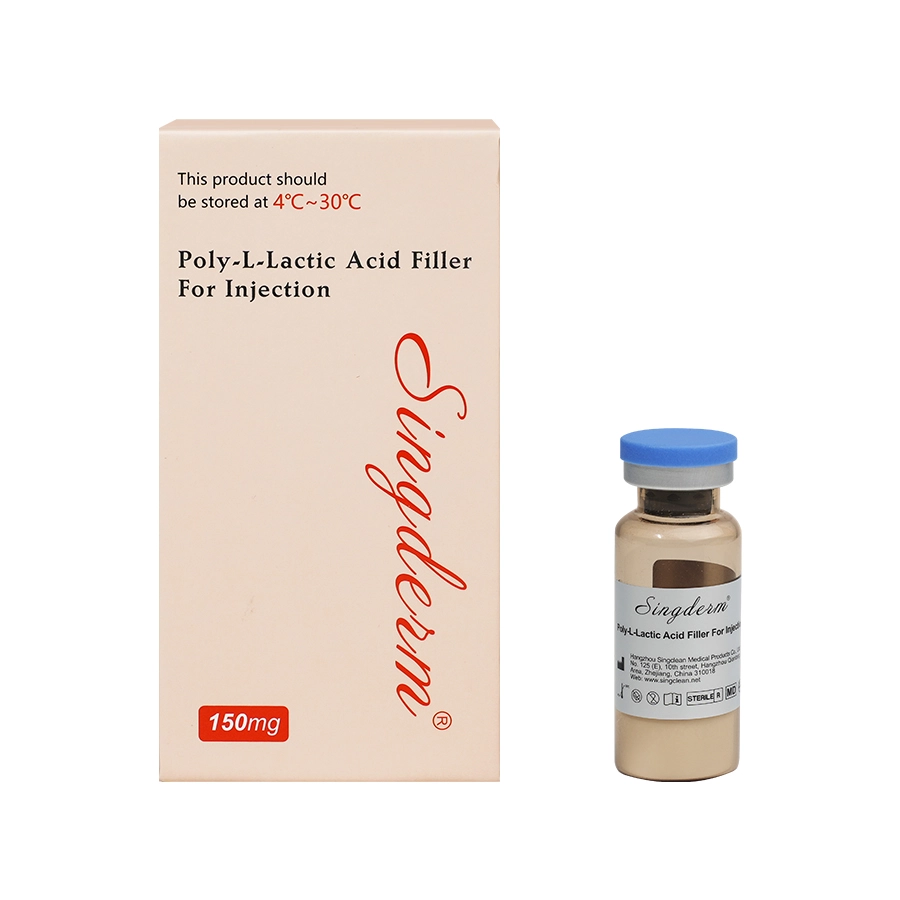
Yes—PLLA Filler is increasingly used in preventive anti-aging treatments, especially among younger patients in their mid-20s to late 30s. Unlike traditional dermal fillers that focus on correcting existing wrinkles, PLLA works by stimulating collagen production, helping younger individuals slow down the visible signs of aging before they appear. This biological, regenerative approach is reshaping the global aesthetic market and creating a new demand segment for distributors and clinics.
Below is a professional, industry-focused analysis explaining why this shift is happening and how PLLA is becoming a strategic product in the preventive anti-aging category.
Younger patients today prioritize "staying ahead of aging" rather than waiting for visible wrinkles to form. PLLA aligns with this mindset because:
It preserves dermal collagen density before significant decline begins.
It offers subtle, natural improvements—not dramatic changes.
It supports long-term skin quality, elasticity, and firmness.
It avoids the "overfilled" look sometimes associated with traditional HA fillers.
From a business standpoint, this new demographic trend translates into consistent, recurring treatment cycles and growing demand for non-invasive, regenerative products like PLLA Filler.
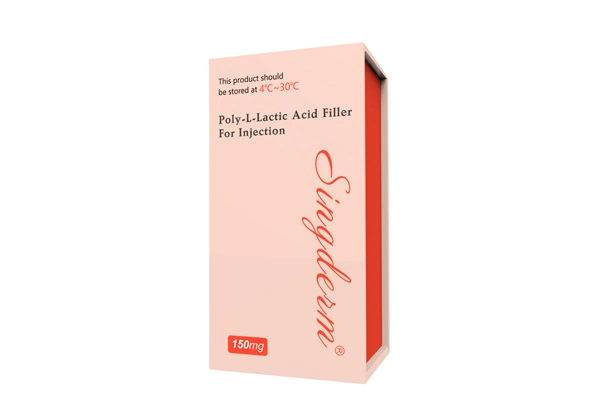
PLLA (Poly-L-Lactic Acid) is a biostimulatory polymer that gradually activates fibroblasts to regenerate type I collagen, which naturally declines by age 25.
Key mechanisms include:
Stimulation of neocollagenesis (new collagen formation)
Improvement of dermal thickness
Enhanced skin elasticity and firmness
Long-term structural support without adding excessive volume
This regenerative pathway means PLLA does not simply fill—it triggers the skin to rebuild its underlying matrix, making it ideal for early intervention.
Clinically, PLLA is recommended for young adults who exhibit:
Mild facial hollowness
Early volume loss in temples or mid-face
Skin laxity from rapid weight loss or genetics
Desire for long-term anti-aging without reliance on repeated HA injections
Preference for collagen-stimulating treatments over instant fillers
These patients often seek subtle improvements, wanting to maintain—not change—their appearance.
Younger patients commonly request PLLA for:
Early temple hollowing can make the face look tired or older. PLLA provides slow, natural restoration.
Subtle enhancement prevents flattening of the cheeks as collagen naturally declines.
Early tightening helps maintain facial contour and prevent jowling later in life.
Used as a collagen "booster" for:
Crepey skin
Early fine lines
Textural improvements
This technique is trending heavily in Korea, Thailand, and the U.S. due to its natural regenerative effect.
Yes, PLLA is suitable for beginners who want gradual enhancement.
Key reasons include:
Controlled, subtle results
Long-term benefits without high-maintenance procedures
Low risk of overfilling
Gradual development of natural collagen
For clinics and distributors, this makes PLLA an excellent entry-point treatment for first-time injectables clients.
Preventive PLLA results typically last:
18–36 months for full treatments
Longer with annual maintenance
Younger skin tends to respond better due to higher baseline collagen activity, often producing more even and predictable outcomes compared to older patients.
While HA fillers remain essential for instant correction, PLLA offers advantages for prevention:
| Feature | HA Filler | PLLA Filler |
|---|---|---|
| Primary Effect | Adds instant volume | Stimulates collagen |
| Best For | Correction | Prevention |
| Duration | 6–12 months | 18–36 months |
| Look | Noticeable immediately | Very natural, gradual |
| Maintenance | Frequent touch-ups | Less frequent, long-term |
PLLA aligns with the trend toward "natural, undetectable enhancements", which younger patients prefer.
Younger consumers are driving global demand for PLLA filler because today's aesthetics culture emphasizes:
Prevention over correction
Natural over artificial results
Bio-stimulation over volumization
Sustainable anti-aging strategies
In the U.S., South Korea, and Southeast Asia, clinics report that preventive aesthetics is now the fastest-growing patient segment, with PLLA among the top-requested biostimulators.
A 25-year-old starting PLLA is likely to continue for 10–20 years.
PLLA requires multiple sessions and ongoing maintenance, driving repeat clinic orders.
Distributors can differentiate through:
Particle size optimization
Concentration adjustments
Reconstitution speed
Packaging and branding design
Clinics often bundle PLLA with:
Skin boosters
RF microneedling
PDRN injections
Laser resurfacing
This creates expanded cross-selling opportunities.
Yes—PLLA is safe when injected correctly and sourced from certified manufacturers.
Safety factors include:
Uniform particle dispersion
Controlled polymerization
Low inflammatory potential
Deep injection technique (for structural areas)
Clinics should avoid superficial placement to prevent nodule formation.
PLLA Filler is becoming a cornerstone of preventive anti-aging, driven by younger patients who want proactive, natural, and long-lasting improvements. With its collagen-regenerating mechanism, subtle aesthetic impact, and long-term benefits, PLLA represents a major opportunity for distributors seeking growth in the next wave of aesthetic innovation.
The preventive aesthetics market is expanding—and PLLA is positioned at its center.
1. What age should you start PLLA?
Many begin in their mid-to-late 20s when collagen loss naturally begins.
2. Can PLLA be used purely for prevention?
Yes—especially in diluted protocols aimed at collagen support, not volume.
3. How many sessions are needed?
Generally 2–3 sessions spaced 4–6 weeks apart, then annual maintenance.
4. Does PLLA look natural?
Extremely natural. Results develop slowly over months as collagen forms.
5. Is PLLA better than Botox or HA for prevention?
PLLA is best for collagen support. Botox prevents dynamic wrinkles; HA treats existing volume loss. They complement each other, not compete.
 Call us on:
  Email Us:
  No. 125(E), 10th Street, Hangzhou Qiantang Area, Zhejiang, China