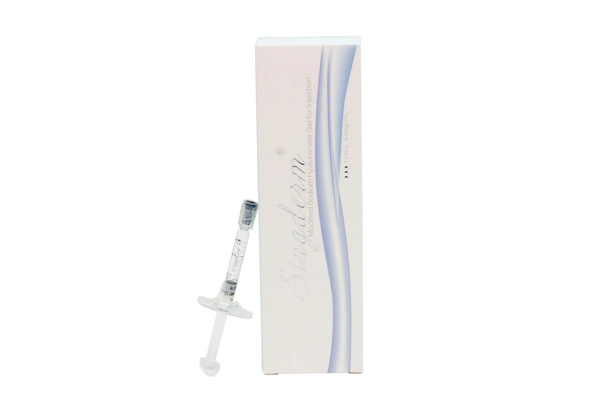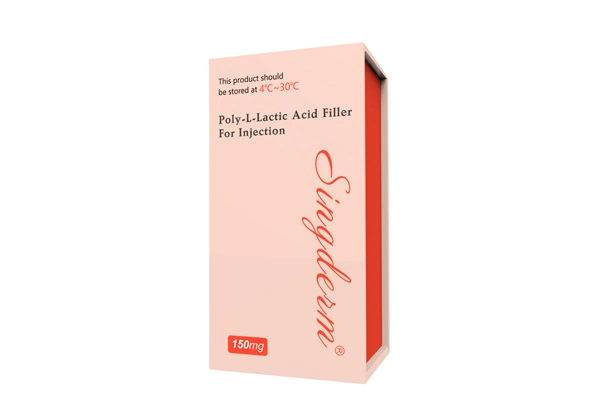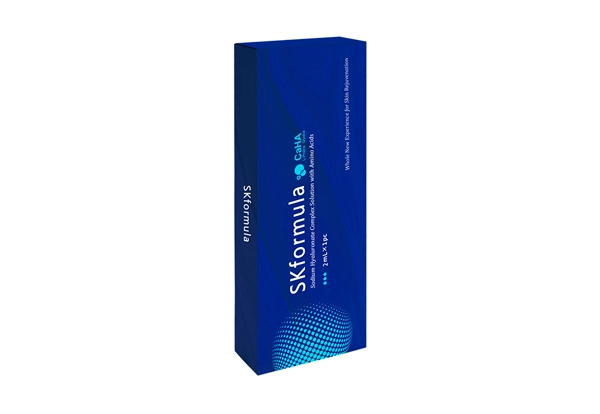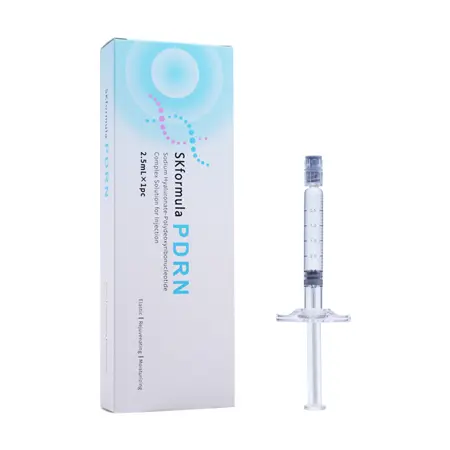

As the global aesthetic industry evolves, practitioners and distributors alike are re-evaluating the role of hybrid dermal fillers in modern injectables. While traditional HA fillers remain a market staple for their proven safety and instant results, hybrid formulations—such as PLLA HA fillers—are rapidly gaining momentum for their dual-action benefits: immediate correction and long-term collagen regeneration.
So, which performs better in clinical settings? The short answer: hybrid fillers offer superior longevity and regenerative outcomes, making them increasingly preferred in advanced medical aesthetics. Let's dive deeper from a manufacturer's and wholesaler's perspective.

Conventional dermal fillers are primarily hyaluronic acid (HA)-based gels. They restore lost volume, smooth wrinkles, and hydrate skin by attracting and retaining water molecules in the dermis.
Advantages: Immediate results, easy reversibility, and well-documented safety profiles.
Limitations: Temporary results (6–12 months).
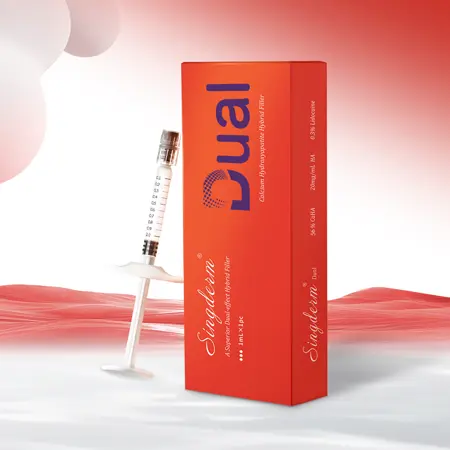
A hybrid dermal filler combines HA with biostimulatory agents such as Poly-L-Lactic Acid (PLLA), Calcium Hydroxylapatite (CaHA), or Polycaprolactone (PCL).
Advantages: Instant filling from HA + long-term collagen production from stimulators.
Limitations: Slightly more complex injection protocols and manufacturing precision requirements.
From a clinical standpoint, hybrid fillers provide both immediate aesthetic improvement and biological skin rejuvenation, representing the next generation of injectable technology.
| Aspect | Traditional HA Filler | Hybrid (e.g., PLLA HA Filler) |
Primary Function | Volume restoration & wrinkle correction | Volume + collagen regeneration |
Longevity | 6–12 months | 18–24 months |
Result Onset | Immediate | Immediate + progressive |
Texture | Soft and hydrating | More cohesive, elastic |
Ideal Use | Lips, fine lines, superficial wrinkles | Midface, temples, jawline, skin tightening |
Market Segment | Mainstream | Premium / advanced aesthetic solutions |
Clinicians are increasingly integrating hybrid fillers into practice because they combine the best of both worlds—the versatility of HA and the longevity of biostimulators.
The most discussed innovation in this category is the PLLA HA filler, a dual-action product merging HA’s hydrating matrix with Poly-L-Lactic Acid’s regenerative mechanism.
Mechanism of Action:
HA Component: Provides instant plumping, hydration, and skin elasticity.
PLLA Component: Gradually activates fibroblasts to synthesize new collagen and elastin fibers, reinforcing skin structure over months.
Clinical Benefits:
Immediate visible improvement post-injection.
Continuous enhancement as collagen remodeling occurs.
Prolonged firmness and elasticity even after HA has degraded.
From a production standpoint, creating a stable PLLA-HA suspension requires advanced formulation control to ensure particle uniformity and injection consistency—key quality benchmarks buyers should prioritize when sourcing hybrid fillers.
As a dermal filler manufacturer or distributor, understanding formulation science is essential for selecting or developing competitive hybrid products.
Key technical considerations include:
Particle size distribution: Uniform PLLA or CaHA microspheres prevent clogging and ensure smooth injection.
Crosslinking ratio of HA: Determines viscosity, cohesivity, and tissue integration.
Rheological stability: Essential for predictable extrusion force and aesthetic precision.
Sterilization process: Must maintain HA integrity without compromising PLLA activity.
A reliable supplier should provide detailed technical data sheets, clinical study results, and CE/KFDA/FDA certification documentation to verify production quality and compliance.
Traditional HA Fillers are preferred for:
Fine lines and lips.
Superficial corrections requiring softness and high elasticity.
Hybrid Fillers (PLLA HA, HA + CaHA) excel in:
Midface volumization and contouring.
Skin tightening and rejuvenation.
Improving dermal density and firmness.
Long-term anti-aging treatments.
In clinical practice, hybrid fillers are often used for patients seeking both immediate enhancement and sustained improvement—ideal for those resistant to frequent retreatment.
From a wholesale and sales standpoint, hybrid fillers represent a premium market category with increasing profit margins.
Pricing Position: Typically 20–40% higher than HA-only fillers due to enhanced performance and production complexity.
Consumer Appeal: Patients perceive hybrids as "next-generation injectables," driving clinic demand.
Business Impact: Clinics offering hybrid fillers often report higher patient retention due to lasting results.
For manufacturers and distributors, expanding into hybrid formulations aligns with the global shift toward regenerative aesthetics—a sector projected to grow significantly over the next five years.
Studies and clinical reports consistently show that hybrid fillers outperform HA-only fillers in longevity and skin quality improvement.
Histological evidence confirms increased collagen and elastin synthesis after PLLA-HA treatment.
Patient-reported outcomes highlight smoother texture and improved skin resilience over 18–24 months.
Physician evaluations emphasize reduced touch-up frequency and higher satisfaction in structural corrections.
As these clinical insights accumulate, hybrid fillers are rapidly becoming the preferred choice for experienced injectors and aesthetic centers aiming for sustainable results.
The industry is moving beyond traditional volumization to bioactive, tissue-regenerative injectables. Hybrid fillers represent the forefront of this evolution. Future development focuses on:
Customized polymer ratios for different facial zones.
Smart-release technologies for controlled biostimulation.
Integration with peptides and growth factors for enhanced dermal regeneration.
Manufacturers capable of adapting production lines to support these innovations will gain a significant competitive edge in global filler distribution.
In clinical practice, hybrid fillers deliver more comprehensive and longer-lasting results compared to traditional HA fillers. While HA-only products remain foundational, PLLA HA fillers and other hybrid dermal filler technologies are redefining the standards of facial rejuvenation.
For distributors, importers, and OEM/ODM partners, investing in hybrid filler lines means aligning with the future of aesthetic medicine—a market that values regeneration, longevity, and innovation.
1. Are hybrid fillers safe for all patients?
Yes, when produced with certified raw materials and injected by trained professionals, hybrid fillers maintain high biocompatibility and safety profiles.
2. How long do PLLA HA fillers last?
Results typically last 18–24 months, with collagen regeneration continuing even after HA resorption.
3. What's the main difference between HA + PLLA and HA + CaHA fillers?
PLLA focuses more on gradual collagen stimulation, while CaHA provides firmer structural lift and contouring.
4. Can hybrid fillers replace traditional HA fillers entirely?
Not entirely—each has distinct indications. HA fillers are still ideal for fine lines and lip augmentation, while hybrids excel in rejuvenation and midface lifting.
5. Why are hybrid fillers considered the future of injectables?
Because they combine instant results with biological regeneration—offering patients longer-lasting, natural outcomes and clinics higher-value treatment options.
 Call us on:
  Email Us:
  No. 125(E), 10th Street, Hangzhou Qiantang Area, Zhejiang, China