
In aesthetic medicine, the shift from simple volume replacement to regenerative collagen stimulation represents a significant clinical advancement. Poly-L-lactic acid (PLLA) has emerged as a leading collagen stimulator injection, offering a biological approach to facial aging. Unlike traditional fillers that only physically occupy space, poly-L-lactic acid treatment works gradually to restore structural integrity by stimulating the patient’s own collagen production.
This article presents a PLLA before and after case study informed by a multi-center, randomized, double-blind clinical trial involving 275 subjects. We examine treatment planning, clinical outcomes, and why PLLA injections are becoming a standard for facial rejuvenation treatment in clinics worldwide.
Treatment considerations and key planning factors:
Injection areas: Bilateral nasolabial folds (primary target), midface (malar region), and pre-jowl sulcus.
Total PLLA dosage per session: Consistent with the clinical trial protocol (product specifications: 165 mg/vial up to 405 mg/vial depending on wrinkle severity).
Treatment cycle: One session per month, with 2–3 sessions constituting one complete course, as recommended in the product documentation.
Reconstitution protocol: Sterile water for injection was added according to vial specification (e.g., 5 mL for 405 mg/vial), followed by shaking and a 30-minute standing period to ensure complete dissolution and bubble removal.
Key planning factors:
The patient was advised to massage treated areas as directed by the physician to optimize product distribution.
No concurrent treatments were performed to allow accurate assessment of the collagen biostimulator effect.
The following outcomes are contextualized by clinical trial data from page 21 of the Singderm® PLLA documentation.
Clinical Trial Background:
A total of 275 subjects were enrolled in a multi-center, randomized, double-blind, active-controlled clinical trial.
The test group received Singderm® PLLA; the control group received a marketed domestic similar PLLA product (not hyaluronic acid).
Primary efficacy endpoint: Improvement rate for nasolabial fold wrinkle score at 6 months post-last injection.
Results (Per Protocol Set analysis at 6 months post-last injection):
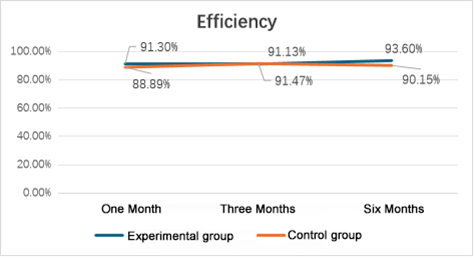
Test group (Singderm® PLLA): 93.60% improvement rate
Control group (domestic similar PLLA product): 90.15% improvement rate
Based on comprehensive preclinical and clinical study data, collagen regeneration indicators in the test group showed significant improvement, confirming that Singderm® Poly-L-Lactic Acid for Injection can achieve fundamental improvement in skin collagen levels and visible reversal of aging appearance.
Patient Case Study Timeline (Based on typical PLLA treatment course)
Long-term Efficacy:3-month and 6-month data not included in this analysis). Currently, at 6 months post-last injection, PPS analysis results show: Improvement rate for nasolabial fold wrinkle score was 93.60% in the test group, compared to 90.15% in the marketed control group (domestic similar product L).
(Note: Singderm® control group used similar PLLA products, not hyaluronic acid fillers used in some studies)
The global aesthetic market is undergoing a paradigm shift from passive filling to active regeneration. Collagen biostimulator products like PLLA now represent one of the fastest-growing categories for several reasons:
Natural patient preference: Modern patients fear the “frozen face” look. PLLA provides gradual, autologous collagen regeneration – results appear as “their own tissue” over time.
Long-lasting outcomes: PLLA treatment can maintain aesthetic improvement for 18–24 months, appealing to patients who seek fewer touch-ups.
Practice efficiency: Once a clinic establishes a PLLA protocol, follow-up requirements are minimal compared to short-duration fillers.
Distributor perspective: Aesthetic distributors are actively adding collagen biostimulator injection lines to their portfolios because:
PLLA products offer differentiation from saturated HA filler markets.
Clinical data (such as the 93.60% improvement rate from a 275-subject trial) provides strong marketing support.
Clinics request PLLA training and support, creating recurring partnership opportunities.
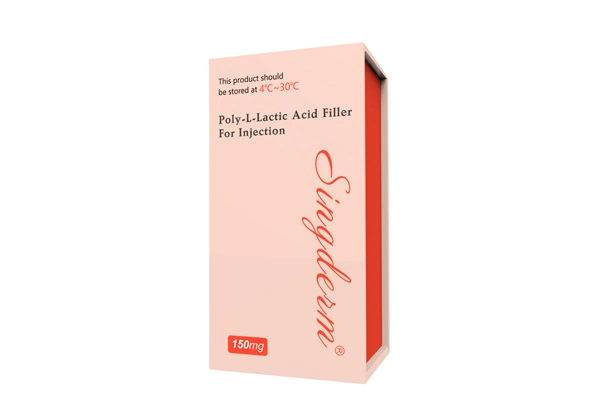
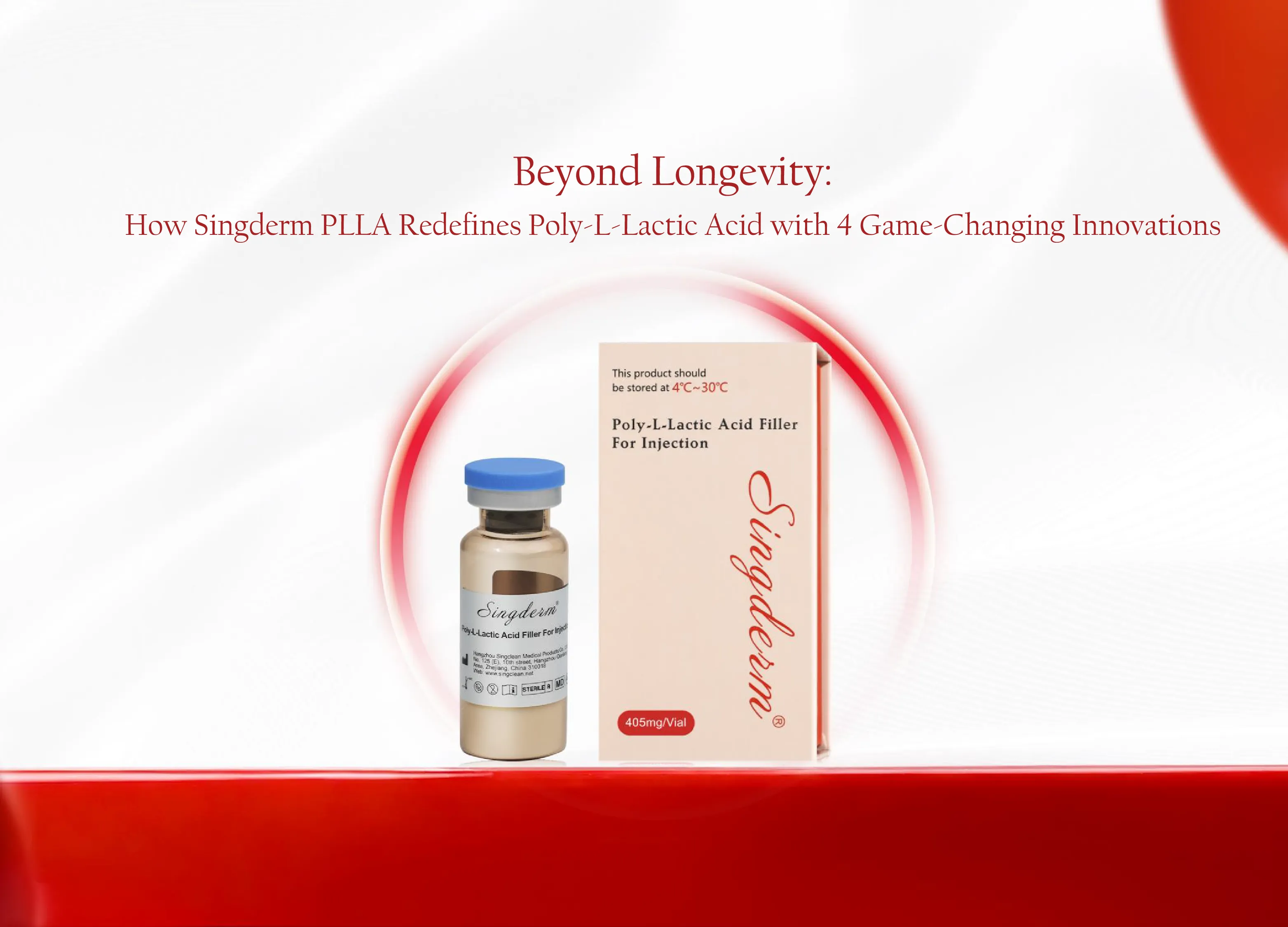
For distributors, carrying a poly-L-lactic acid PLLA product like Singderm® (which offers multiple vial sizes: 165 mg, 240 mg, 320 mg, and 405 mg) enables targeting of both entry-level and premium practices.
1. How many PLLA treatments are needed?
A standard treatment course includes 2–3 sessions spaced one month apart, as recommended in the product documentation (page 12). Some patients with severe volume loss may benefit from additional sessions.
2. Who is a good candidate for PLLA?
Ideal candidates are adults with moderate-to-severe facial wrinkles (such as nasolabial folds), loss of cheek volume, or jawline definition. Patients who prefer gradual, natural results over sudden changes are particularly suitable.
3. Is PLLA better than HA fillers?
They are complementary. PLLA is better for global collagen restoration and long-term structural support (18–24 months). HA fillers are better for immediate, focal corrections (e.g., lips, tear troughs). The clinical trial referenced used a PLLA-to-PLLA comparison, not HA.
4. What are the safety considerations with poly-L-lactic acid?
Common side effects include transient swelling, redness, and bruising. Rare but manageable risks include papules or nodules (often technique-related). Proper reconstitution (including the recommended 30-minute standing period) and injection technique help minimize adverse events.
5. How long may PLLA results last?
Based on product documentation, the effect can last over 2 years (18–24 months). Collagen regeneration continues beyond the 6-month time point measured in the clinical trial.
6. Can PLLA be combined with other treatments?
Yes. Clinicians often combine PLLA facial treatment with HA fillers (for immediate lift), botulinum toxins, or energy-based devices. However, combination protocols should be sequenced appropriately.
This PLLA before and after case study, contextualized by clinical trial data from 275 subjects, demonstrates that poly-L-lactic acid treatment offers a clinically robust solution for facial volume restoration and structural rejuvenation. The trial showed a 93.60% improvement rate for nasolabial fold wrinkle scores at 6 months post-treatment, with significant improvement in collagen regeneration indicators. For clinics and distributors, adding a collagen biostimulator like PLLA to the aesthetic portfolio addresses a growing demand for regenerative, high-retention treatments.
Explore Singderm’s aesthetic portfolio:
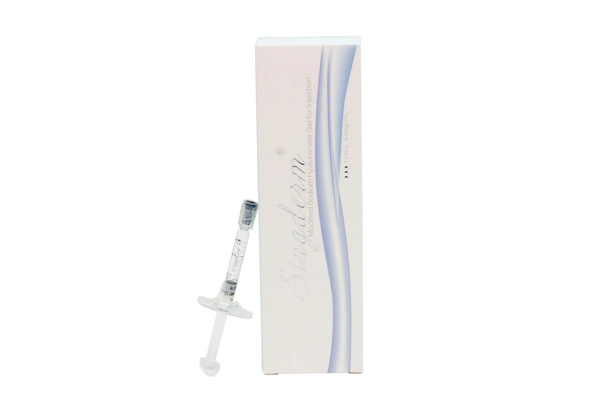
Singderm® PLLA Filler – Available in 165 mg, 240 mg, 320 mg, and 405 mg vials for precise dosing based on wrinkle severity.
Singderm® HA Filler – For complementary immediate-volume correction protocols.
Contact our medical affairs team for clinical training, reconstitution protocols, and distribution partnership opportunities.
 Call us on:
  Email Us:
  No. 125(E), 10th Street, Hangzhou Qiantang Area, Zhejiang, China