
In the ever-evolving field of aesthetic medicine, biological injectables are gaining traction for their ability to repair, regenerate, and rejuvenate the skin from within. Among them, PDRN skin booster injections and PRP (Platelet-Rich Plasma) treatments have become two dominant choices for clinics and distributors focused on regenerative skincare solutions.
While both utilize biological mechanisms to trigger collagen production and improve skin quality, their composition, stability, and clinical results differ significantly. From a manufacturer and B2B perspective, understanding these differences is crucial for selecting the right products to expand your professional injectable portfolio.
Let's explore the scientific, clinical, and commercial distinctions between PDRN and PRP to determine which delivers better long-term value in medical aesthetics.
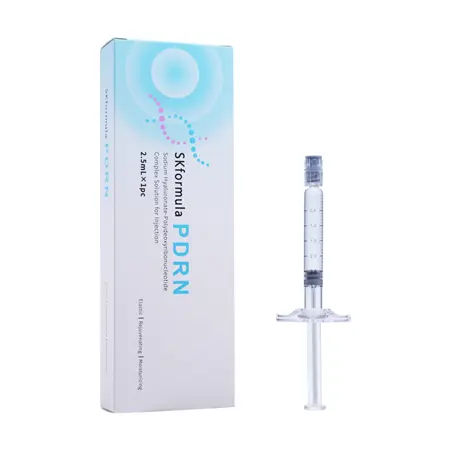
Both PRP and PDRN are effective in stimulating tissue repair and collagen regeneration. However, PDRN skin booster injections offer more consistent, standardized, and commercially viable results.
PRP depends entirely on the patient's own blood quality and platelet concentration, leading to variable outcomes. In contrast, PDRN (Polydeoxyribonucleotide) is a purified, DNA-based bioactive ingredient extracted from salmon or trout sperm cells. Its pharmaceutical-grade standardization ensures predictable biological activity and stable results across patients.
For wholesalers and aesthetic manufacturers, this reproducibility makes PDRN a more scalable and globally distributable option compared to patient-dependent PRP systems.
Origin: DNA fragments extracted from salmonid fish sperm, purified through enzymatic hydrolysis.
Mechanism:
Activates the A2A adenosine receptor, promoting tissue repair and anti-inflammatory action.
Stimulates fibroblast proliferation for new collagen and elastin synthesis.
Enhances microcirculation and angiogenesis, improving skin vitality.
Clinical Outcomes:
Repairs damaged dermal tissue.
Improves elasticity and tone.
Reduces inflammation and accelerates wound healing.
Because of its bio-regenerative properties, PDRN functions at the cellular level, targeting DNA repair and cell turnover—making it particularly effective for aging, post-acne, and photo-damaged skin.
Origin: Autologous blood drawn from the patient, centrifuged to separate platelets from plasma.
Mechanism:
Releases growth factors (PDGF, VEGF, TGF-β, EGF) from activated platelets.
Stimulates fibroblast proliferation and extracellular matrix formation.
Promotes wound healing and tissue regeneration through paracrine signaling.
Clinical Outcomes:
Improves skin texture and tone.
Reduces fine lines and scars.
Encourages hair growth and healing in mesotherapy applications.
However, PRP's efficacy heavily depends on patient-specific variables—including platelet count, hydration status, and extraction protocol—leading to inconsistent clinical results.
| Parameter | PDRN Skin Booster Injection | PRP (Platelet-Rich Plasma) |
Composition | Purified DNA fragments (salmon-derived) | Autologous platelet concentrate |
Mechanism | Cellular repair via DNA activation | Growth factor release |
Consistency | Pharmaceutical-grade, standardized | Varies by patient |
Procedure Time | 10–15 minutes | 30–45 minutes (requires blood draw & centrifuge) |
Pain/Discomfort | Minimal | Moderate (injection site sensitivity) |
Storage/Distribution | Pre-filled sterile vials | Must be prepared immediately before use |
Scalability for Clinics | High | Limited by procedural complexity |
From a commercial and clinical efficiency viewpoint, PDRN boosters have a clear advantage for clinics looking to offer regenerative treatments that are both effective and easy to integrate into daily operations.
Ideal for clinics seeking consistent anti-aging outcomes.
Applications:
Skin repair and regeneration.
Acne scar improvement.
Photoaging and oxidative damage treatment.
Post-laser or post-procedure recovery.
Fine-line reduction and elasticity restoration.
Benefits for Practitioners:
Pre-formulated, ready-to-use vials with controlled concentration.
Can be combined with HA, peptides, or amino acids.
Minimal downtime and low risk of adverse reaction.
Best suited for autologous rejuvenation protocols where natural, patient-derived materials are prioritized.
Applications:
Facial rejuvenation ("vampire facial").
Hair loss therapy.
Post-surgical wound healing.
Challenges:
Requires centrifuge equipment and specialized training.
Results vary widely between patients.
Higher labor cost and limited scalability for busy clinics.
As a manufacturer or distributor, it's essential to evaluate production stability, sterility assurance, and regulatory compliance when sourcing regenerative injectables.
For PDRN Skin Boosters:
Molecular Size: Optimal range (50–1500 kDa) ensures cellular absorption.
Purity: Must exceed 95% to minimize immunogenic risk.
Sterilization: Gamma radiation or aseptic filtration to preserve DNA structure.
Regulatory Approvals: Look for CE, KFDA, or NMPA certifications to ensure compliance.
For PRP Systems:
Quality control depends entirely on clinical handling—not manufacturing.
Variability in centrifuge speed, tube design, and activation process can impact results.
From an industrial scalability standpoint, PDRN-based injectables are easier to standardize and distribute globally under consistent specifications—something PRP cannot achieve.
From a wholesale and sales perspective, PDRN boosters are increasingly preferred by distributors due to:
Ready-to-sell product format (no equipment or preparation required).
Higher treatment adoption rate among clinics and medspas.
Longer shelf life and stable transport conditions.
Stronger profit margins compared to PRP kits.
Globally, the regenerative injectable market is shifting from autologous procedures (like PRP) toward standardized biostimulatory products such as PDRN and PN (polynucleotide) boosters, which offer scalability and proven clinical efficacy.
Some advanced clinics combine PDRN skin booster injections with PRP in multi-layer rejuvenation protocols.
PRP acts as the growth factor source.
PDRN provides cellular repair and long-term DNA support.
This dual approach maximizes both instant and sustained tissue regeneration, appealing to high-end aesthetic centers. However, this requires precise technique and physician expertise to optimize safety and outcomes.
PDRN boosters are typically classified as Class III medical devices or biological injectables, with proven safety and low allergic potential due to purification standards.
In contrast, PRP is autologous, so it carries minimal allergy risk—but the risk of infection or contamination depends on clinic handling and sterilization protocols.
From a distributor's standpoint, PDRN injectables offer a lower operational risk, since manufacturing and sterility are controlled at the factory level, rather than at the clinic.
The professional aesthetic market increasingly favors PDRN and PN injectables for several reasons:
Scalable global manufacturing (no patient dependency).
Ease of use for practitioners (no equipment investment).
Predictable patient outcomes.
Growing regulatory recognition as "biorevitalization agents."
In Asia and Europe, PDRN injectables have already become mainstream alternatives to PRP, particularly for clinics emphasizing consistent results and streamlined operation.
Both PRP and PDRN skin booster injections play vital roles in regenerative aesthetics, but their applications differ by clinical goals and operational structure.
PRP is ideal for personalized, autologous procedures.
PDRN is the superior choice for clinics seeking standardized, scalable, and biologically effective solutions for collagen stimulation and skin repair.
For manufacturers and distributors, investing in high-quality PDRN skin booster lines is a forward-looking strategy—aligning with the market's growing demand for reliable, scientifically validated, and globally distributable regenerative injectables.
1. Is PDRN safer than PRP?
Yes. PDRN is sterile, standardized, and purified, reducing the risks associated with manual blood handling or contamination.
2. How long do PDRN results last?
Typically 3–6 months per treatment cycle, with cumulative improvements over repeated sessions.
3. Can PDRN boosters replace PRP?
In many clinics, yes—especially where consistent and reproducible results are prioritized.
4. Do PDRN injections contain growth factors like PRP?
No, but they stimulate endogenous collagen and elastin production by activating cellular DNA repair processes.
5. What should distributors look for when sourcing PDRN boosters?
Focus on purity, certification (CE/KFDA/NMPA), molecular stability, and supplier experience in dermal filler or bioregenerative product manufacturing.
 Call us on:
  Email Us:
  No. 125(E), 10th Street, Hangzhou Qiantang Area, Zhejiang, China