
In today's highly competitive aesthetics market, distributors and wholesalers must strategically select products that meet both clinical demands and long-term business growth objectives. Among the most dominant injectable materials are hyaluronic acid (HA) and calcium hydroxylapatite (CaHA)—two formulations that define modern facial rejuvenation.
Both are biocompatible, FDA-approved materials, but they differ significantly in mechanism, clinical performance, cost structure, and target demographics. For distributors seeking to expand or refine their filler portfolios, understanding these distinctions is crucial for positioning products effectively in regional markets.
Let's examine the key differences between hyaluronic acid dermal fillers and calcium hydroxylapatite fillers from a manufacturer and wholesale strategy perspective.
| Feature | Hyaluronic Acid Dermal Filler | Calcium Hydroxylapatite Filler |
Primary Action | Immediate volume restoration & hydration | Collagen stimulation + volumizing |
Duration | 6–12 months | 12–24 months |
Texture | Soft to medium; versatile | Firm, dense; ideal for contouring |
Reversibility | Fully reversible with hyaluronidase | Not reversible |
Target Market | Broad; face, lips, tear trough, fine lines | Niche; midface, jawline, deep folds |
Price Segment | Mainstream | Premium / advanced |
Profit Margin (B2B) | High-volume, steady turnover | High-value, lower turnover |
For most distributors, hyaluronic acid dermal fillers form the commercial backbone due to their safety, versatility, and wide clinical use. However, CaHA-based fillers play an increasingly strategic role in premium and regenerative markets, where long-term collagen stimulation and lifting effects are in demand.
HA is a naturally occurring polysaccharide found in the skin's extracellular matrix. Modern fillers use crosslinked HA gels to resist degradation and provide sustained volumizing effects.
Mechanism of Action:
Provides immediate volume through water-binding capability.
Improves hydration and elasticity in the dermis.
Softens wrinkles and restores facial contour.
Clinical Benefits:
Natural look and feel.
Adjustable and reversible.
Suitable for all facial zones, including delicate areas like lips and under-eye regions.
Business Perspective:
From a manufacturing standpoint, HA filler production allows broad product diversification—different crosslinking technologies, molecular weights, and viscosities can be tailored for various indications (fine lines, deep folds, contouring). This flexibility makes HA fillers ideal for private-label OEM/ODM production, ensuring consistent demand and scalability for distributors.
CaHA consists of microspheres of calcium and phosphate (similar to bone composition) suspended in a gel carrier. Once injected, the gel provides immediate volume while the microspheres stimulate collagen and elastin production over time.
Mechanism of Action:
Immediate lift and volume from the carrier gel.
Long-term biostimulation as microspheres induce collagen synthesis.
Gradual replacement of gel with natural tissue structure.
Clinical Benefits:
Long-lasting results (up to 24 months).
Ideal for deep wrinkles, jawline contouring, and volumization.
Improves skin firmness through biological regeneration.
Business Perspective:
CaHA fillers are positioned in the premium aesthetic segment, where practitioners focus on long-term rejuvenation and structural enhancement. However, manufacturing CaHA injectables requires higher material precision and quality control—particle size distribution, sterility, and dispersion stability are critical for injection safety. This makes sourcing from a reliable OEM with established quality systems (ISO, CE, KFDA certifications) essential.
| Treatment Area | Recommended Filler Type | Rationale |
Fine lines (perioral, crow's feet) | HA | Soft gel, smooth integration |
Lip augmentation | HA | Elastic and reversible |
Tear trough correction | HA | Low viscosity, natural appearance |
Nasolabial folds | HA or CaHA | Depends on depth and patient preference |
Midface volume restoration | CaHA | Better lifting and collagen regeneration |
Jawline contouring | CaHA | Firm structure for definition |
Hand rejuvenation | CaHA | Strong skin tightening effect |
Clinically, HA fillers dominate versatile, high-frequency treatments, while CaHA fillers serve as niche, high-value solutions for advanced contouring and biostimulation. For distributors, offering both ensures coverage of the entire aesthetic spectrum—from everyday cosmetic correction to long-term anti-aging solutions.
For wholesalers evaluating suppliers, attention to formulation and production standards directly impacts product safety, efficacy, and market reputation.
HA Concentration: Typically 18–25 mg/ml for dermal fillers.
Crosslinking Agent (BDDE): Determines elasticity and duration.
Viscoelasticity (G' value): Higher G' = stronger lifting ability.
Cohesivity: Affects tissue integration and product spread.
Particle Size: 25–45 μm (smaller particles ensure safety).
Microsphere Uniformity: Prevents injection resistance or granuloma risk.
Carrier Gel Stability: Should maintain consistent viscosity during injection.
Biocompatibility Testing: Must comply with ISO 10993 standards.
Distributors should demand full technical data sheets (TDS), batch consistency reports, and clinical documentation from their manufacturing partners—especially when dealing with CaHA fillers, where particle uniformity and sterility are crucial.
From a sales and inventory management perspective, the commercial dynamics of these two fillers differ considerably:
High sales volume with shorter replacement cycles (every 6–12 months).
Broader customer base—clinics, medspas, dermatologists.
Ideal for bulk purchasing and long-term B2B contracts.
Higher price per unit, lower monthly volume.
Suited for premium or specialty clinics.
Excellent option for brand diversification and positioning in the upper segment.
Many distributors adopt a dual strategy—maintaining a stable HA filler line as their main revenue driver, while offering CaHA fillers as a complementary premium category for differentiation.
Europe & Asia: HA fillers dominate in both sales volume and diversity, supported by extensive CE- and KFDA-certified options.
North America: CaHA fillers (such as Radiesse-type formulations) hold a strong niche in structural lifting and biostimulation.
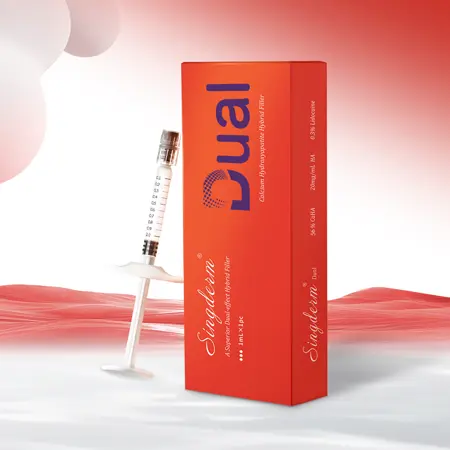
Emerging Markets: Increasing demand for hybrid fillers (HA + CaHA) combines the best of both materials—instant hydration and long-term collagen regeneration—offering distributors a promising growth avenue.
As bio-regenerative aesthetics gain global attention, distributors who align early with collagen-stimulating product lines are better positioned to lead in the premium segment.
When structuring your filler portfolio:
Lead with HA fillers: They remain the global bestsellers due to safety, reversibility, and versatility.
Add CaHA fillers: Position as premium solutions for advanced practitioners and clinics seeking biostimulatory outcomes.
Explore hybrid formulations: Future-ready fillers combining HA with CaHA or PLLA appeal strongly to innovation-driven markets.
A balanced portfolio increases market adaptability, customer retention, and profitability.
Both hyaluronic acid dermal fillers and calcium hydroxylapatite injectables play vital roles in modern aesthetics—but they serve different strategic purposes.
For distributors and manufacturers, HA fillers deliver scalability and steady revenue, while CaHA fillers strengthen brand prestige and expand into regenerative aesthetics. Together, they form a comprehensive, future-proof filler portfolio—capable of meeting diverse clinical needs and market expectations.
1. Which filler is more profitable for distributors?
HA fillers typically generate higher total revenue due to sales volume, while CaHA fillers yield higher margins per unit in the premium segment.
2. Can CaHA fillers be used in combination with HA fillers?
Yes, combination therapy is increasingly popular, using HA for superficial correction and CaHA for deeper lifting.
3. What should buyers prioritize when sourcing CaHA fillers?
Particle size uniformity, clinical documentation, and regulatory certification are critical for ensuring safety and performance.
4. Are HA fillers easier to market internationally?
Yes. HA fillers face fewer regulatory barriers and have broader clinical indications, making them ideal for global distribution.
5. What's the emerging trend in the filler market?
Hybrid fillers combining HA and CaHA or HA and PLLA are gaining global attention, offering both immediate correction and long-term regeneration.
 Call us on:
  Email Us:
  No. 125(E), 10th Street, Hangzhou Qiantang Area, Zhejiang, China